
![The_Trinity__Trumpet__Consultation_Room___Three_professional_musicians_guide_you_to_your_own_unique_answer__[Scheduled_for_release_in_late_October_2026_☆_Pre-orders_now_being_accepted!!]_01](http://global.ikebe-gakki.com/cdn/shop/files/870386_01.jpg?v=1792305844&width=1500)


Cargando...
Ongakunotomosha | SKU:
870386
Nuevo producto
Ongakunotomosha The Trinity "Trumpet" Consultation Room / Three professional musicians guide you to your own unique answer. [Scheduled for release in late October 2026 ☆ Pre-orders now being accepted!!]
Precio normal
$17.00
Precio unitario
/
Agotado
Los gastos de envío se calcularán al momento de pagar.
Product Condition
| Brand New | Unused, as sold. |
|---|---|
| Mint | Like new, no flaws. |
| Excellent | Barely used, very minor wear. |
| Very Good | Light wear, fully functional. |
| Good | Visible wear, plays fine. |
| Fair | Heavy wear, still playable. |
No se ha podido cargar la disponibilidad de recogida
![The_Trinity__Trumpet__Consultation_Room___Three_professional_musicians_guide_you_to_your_own_unique_answer__[Scheduled_for_release_in_late_October_2026_☆_Pre-orders_now_being_accepted!!]_01](http://global.ikebe-gakki.com/cdn/shop/files/870386_01.jpg?v=1792305844&width=112)
Ongakunotomosha The Trinity "Trumpet" Consultation Room /...
Precio normal
$17.00
Precio unitario
/
Agotado
Descripción
Descripción
The Trinity "Trumpet" Consultation Room: Three professional musicians guide you to your own unique answer.
Written by Tomoyuki Hasegawa, Aki Matsuki, and Takashi Shinozaki
Size/Number of pages/A5/136 pages Publication date/October 2026
ISBN code: 9784276145719
Product Code / 145710
What makes this book unique and unlike other books on the subject is that three principal trumpet players from professional orchestras simultaneously offer advice on a variety of trumpet-related issues.
Depending on the nature of the consultation, the three may offer different perspectives or similar advice, but readers can find the answer that best suits them—the right answer for them—from among the diverse range of responses.
Furthermore, by introducing various approaches to solving problems, this content aims to broaden the perspectives of amateur musicians who tend to be short-sighted.
●Table of Contents
First, author profile
Chapter 1: Questions about musical instruments
Question 1: What should I be careful about when trying out and buying a new trumpet at a music store?
Question 2: Please tell me how professionals select instruments. Are selected instruments really good instruments?
Question 3: What should I be careful about when buying a used musical instrument?
Question 4: I heard that it's good to run milk through the tubes of a new instrument.
They also say, "It's better to do a break-in spray." Are these true?
Question 5: How often do you clean the inside of the pipes? Is it okay to clean them right before an actual event?
Question 6: Is a mouthpiece with a larger inner diameter better? What are the advantages and disadvantages?
Question 7: My mouthpiece has become discolored. Will this affect the tone?
Question 8: Is it best to insert the mouthpiece into the instrument in the same direction every time?
Question 9: I'm looking for a double (or triple) case. Can you recommend one?
Question 10: If the first player uses a C trumpet, should the second and third players also use the same C trumpet?
Question 11: When choosing between a C-pipe and a B-pipe, what criteria should I use?
Also, do you change your mindset when you switch instruments?
Question 12: When playing the rotary trumpet, should I change to a special mouthpiece?
Do I need to change my blowing technique?
Chapter 2: Advice on Techniques and Playing Methods
Question 13: Regarding how to sit in a chair, the teacher said, "Don't use the backrest, but sit on the halfway point of the seat."
They say, "Sit with your back straight," but how do professionals sit?
Question 14: When setting the mouthpiece on my lips, is it better to put it on starting with the upper lip?
Question 15: Are there people who are suited or unsuited to this based on factors such as lip thickness or teeth alignment?
Question 16: When taking a bracelet, do I always need to take a full breath?
Question 17: Are breathing techniques necessary? Or are they unnecessary if you can control your breath?
Question 18: I have trouble playing notes above G in tuning B. How can I broaden my range?
Question 19: How long is a warm-up necessary? What are the thoughts of professional musicians?
Question 20: Do professional musicians cool down after a demanding performance?
Question 21: Is practicing pedal tones necessary? What is the purpose of that practice?
Question 22: I can't do lip trills. Please tell me the purpose and methods of practicing them.
Question 23: When I use tonguing in the lower register, the sound becomes blurry. Could you give me some advice?
Question 24: My tongue gets tangled when I play scales quickly using double tonguing. What are some ways to practice this?
Question 25: How can I play each note evenly using triple tonguing?
Question 26: Please explain the difference between using double and triple tonguing.
Question 27: My tonguing and fingering aren't synchronized. What should I do?
Question 28: My lips got tired during rehearsal. How can I get through the actual performance in this condition?
Question 29: I want to improve the durability of my lips. What kind of exercises should I do to achieve that?
Question 30: My lips are acting up, and it's becoming difficult to produce sound. How can I get out of this slump?
Question 31: When I play at fortissimo (ff), I've been told that "the sound seems to spread out horizontally." What could be the reason for this?
Question 32: When I crescendo, the pitch goes up. How can I fix this?
Question 33: At ff (fortissimo), the sound distorts and double buzzes. How can I prevent this?
Question 34: My notes waver when playing in the low register at pp (piano), so I'd like to know a technique to play them stably.
Question 35: When playing a diminuendo in a high note, for example, in Mahler's Symphony No. 2 "Resurrection"
How do you play the high C in measures 185-187 of the fifth movement?
Question 36: In measure 268 of the first movement of Mahler's Symphony No. 2 "Resurrection," there is an espressivo marking.
Yes, I do. What kind of mindset should I have when I play?
Question 37: The Spanish Dance from Act 2 of Tchaikovsky's ballet music "The Nutcracker"
In the solo, I can't get the slur from E-flat to high B. It's difficult...
Chapter 3 Other questions and advice regarding performances 38: Is there a meal I can eat to give me energy before a performance? Is it better not to eat too much before a performance?
Question 39: Please recommend some valve oils and maintenance products.
Question 40: Do professional musicians take care of their lips? What lip balms or other products do they use?
Question 41: What do professional musicians keep in their instrument cases?
Question 42: How many straight mutes do you own? How do you use them differently?
Question 43: To what extent do you check the score of the piece you will be performing?
Question 44: When I'm performing solo, my heart races and I get nervous. What can I do to cope?
Question 45: Are there any orchestral works that are particularly challenging to perform, even for professional musicians?
Question 46: When I'm working with orchestral scores, I can manage if it's in C, but when it's in F or D, I get completely lost. How should I deal with this? I also want to improve my sight-reading skills.
Question 47: Please tell us about any incidents that occurred during your performance.
Question 48: What kind of instruction books do professional musicians use for individual practice? What instruction books do you recommend?
Question 49: Please recommend some solo pieces that are easy for intermediate amateur players to learn.
Question 50: Can you recommend some pieces that sound good for an intermediate-level brass ensemble?
Question 51: What are some things I should be mindful of as a matter of courtesy when attending lessons?
Question 52: Do you pay attention to dental care, which is important for wind instrument players?
Consultation 53: I'm 60 years old and I'm afraid that age-related decline will eventually prevent me from playing my musical instrument.
How can I extend my career as a musician?
Question 54: Please tell us about your pride and dedication as a professional musician.
Question 55: Please give a message to all trumpet lovers.
Editor's Afterword
*Depending on stock availability, delivery may take up to one week.
Furthermore, if the item is discontinued or out of print, we will cancel your order.
Please be aware of this in advance.
Written by Tomoyuki Hasegawa, Aki Matsuki, and Takashi Shinozaki
Size/Number of pages/A5/136 pages Publication date/October 2026
ISBN code: 9784276145719
Product Code / 145710
What makes this book unique and unlike other books on the subject is that three principal trumpet players from professional orchestras simultaneously offer advice on a variety of trumpet-related issues.
Depending on the nature of the consultation, the three may offer different perspectives or similar advice, but readers can find the answer that best suits them—the right answer for them—from among the diverse range of responses.
Furthermore, by introducing various approaches to solving problems, this content aims to broaden the perspectives of amateur musicians who tend to be short-sighted.
●Table of Contents
First, author profile
Chapter 1: Questions about musical instruments
Question 1: What should I be careful about when trying out and buying a new trumpet at a music store?
Question 2: Please tell me how professionals select instruments. Are selected instruments really good instruments?
Question 3: What should I be careful about when buying a used musical instrument?
Question 4: I heard that it's good to run milk through the tubes of a new instrument.
They also say, "It's better to do a break-in spray." Are these true?
Question 5: How often do you clean the inside of the pipes? Is it okay to clean them right before an actual event?
Question 6: Is a mouthpiece with a larger inner diameter better? What are the advantages and disadvantages?
Question 7: My mouthpiece has become discolored. Will this affect the tone?
Question 8: Is it best to insert the mouthpiece into the instrument in the same direction every time?
Question 9: I'm looking for a double (or triple) case. Can you recommend one?
Question 10: If the first player uses a C trumpet, should the second and third players also use the same C trumpet?
Question 11: When choosing between a C-pipe and a B-pipe, what criteria should I use?
Also, do you change your mindset when you switch instruments?
Question 12: When playing the rotary trumpet, should I change to a special mouthpiece?
Do I need to change my blowing technique?
Chapter 2: Advice on Techniques and Playing Methods
Question 13: Regarding how to sit in a chair, the teacher said, "Don't use the backrest, but sit on the halfway point of the seat."
They say, "Sit with your back straight," but how do professionals sit?
Question 14: When setting the mouthpiece on my lips, is it better to put it on starting with the upper lip?
Question 15: Are there people who are suited or unsuited to this based on factors such as lip thickness or teeth alignment?
Question 16: When taking a bracelet, do I always need to take a full breath?
Question 17: Are breathing techniques necessary? Or are they unnecessary if you can control your breath?
Question 18: I have trouble playing notes above G in tuning B. How can I broaden my range?
Question 19: How long is a warm-up necessary? What are the thoughts of professional musicians?
Question 20: Do professional musicians cool down after a demanding performance?
Question 21: Is practicing pedal tones necessary? What is the purpose of that practice?
Question 22: I can't do lip trills. Please tell me the purpose and methods of practicing them.
Question 23: When I use tonguing in the lower register, the sound becomes blurry. Could you give me some advice?
Question 24: My tongue gets tangled when I play scales quickly using double tonguing. What are some ways to practice this?
Question 25: How can I play each note evenly using triple tonguing?
Question 26: Please explain the difference between using double and triple tonguing.
Question 27: My tonguing and fingering aren't synchronized. What should I do?
Question 28: My lips got tired during rehearsal. How can I get through the actual performance in this condition?
Question 29: I want to improve the durability of my lips. What kind of exercises should I do to achieve that?
Question 30: My lips are acting up, and it's becoming difficult to produce sound. How can I get out of this slump?
Question 31: When I play at fortissimo (ff), I've been told that "the sound seems to spread out horizontally." What could be the reason for this?
Question 32: When I crescendo, the pitch goes up. How can I fix this?
Question 33: At ff (fortissimo), the sound distorts and double buzzes. How can I prevent this?
Question 34: My notes waver when playing in the low register at pp (piano), so I'd like to know a technique to play them stably.
Question 35: When playing a diminuendo in a high note, for example, in Mahler's Symphony No. 2 "Resurrection"
How do you play the high C in measures 185-187 of the fifth movement?
Question 36: In measure 268 of the first movement of Mahler's Symphony No. 2 "Resurrection," there is an espressivo marking.
Yes, I do. What kind of mindset should I have when I play?
Question 37: The Spanish Dance from Act 2 of Tchaikovsky's ballet music "The Nutcracker"
In the solo, I can't get the slur from E-flat to high B. It's difficult...
Chapter 3 Other questions and advice regarding performances 38: Is there a meal I can eat to give me energy before a performance? Is it better not to eat too much before a performance?
Question 39: Please recommend some valve oils and maintenance products.
Question 40: Do professional musicians take care of their lips? What lip balms or other products do they use?
Question 41: What do professional musicians keep in their instrument cases?
Question 42: How many straight mutes do you own? How do you use them differently?
Question 43: To what extent do you check the score of the piece you will be performing?
Question 44: When I'm performing solo, my heart races and I get nervous. What can I do to cope?
Question 45: Are there any orchestral works that are particularly challenging to perform, even for professional musicians?
Question 46: When I'm working with orchestral scores, I can manage if it's in C, but when it's in F or D, I get completely lost. How should I deal with this? I also want to improve my sight-reading skills.
Question 47: Please tell us about any incidents that occurred during your performance.
Question 48: What kind of instruction books do professional musicians use for individual practice? What instruction books do you recommend?
Question 49: Please recommend some solo pieces that are easy for intermediate amateur players to learn.
Question 50: Can you recommend some pieces that sound good for an intermediate-level brass ensemble?
Question 51: What are some things I should be mindful of as a matter of courtesy when attending lessons?
Question 52: Do you pay attention to dental care, which is important for wind instrument players?
Consultation 53: I'm 60 years old and I'm afraid that age-related decline will eventually prevent me from playing my musical instrument.
How can I extend my career as a musician?
Question 54: Please tell us about your pride and dedication as a professional musician.
Question 55: Please give a message to all trumpet lovers.
Editor's Afterword
*Depending on stock availability, delivery may take up to one week.
Furthermore, if the item is discontinued or out of print, we will cancel your order.
Please be aware of this in advance.
Payment & Security
Payment methods
Your payment information is processed securely. We do not store credit card details nor have access to your credit card information.
Available payment methods vary by country and are shown at checkout.
Please Note
The following information applies to international orders.
■ Condition
Items with “USED” in the product name are pre-owned and will be delivered as shown in the photos. Signs of wear may be present. All items are function-tested by our staff and rechecked before dispatch.
■ Stock
Many products are stocked across Ikebe stores in Japan. As a result, shipment may take several days. In-store sales may also cause items to sell out. If an item is unavailable, we will contact you promptly; in that case, the order will be canceled and any payment will be refunded.
■ Shipping
Preparation: 2-3 business days (store transfer & inspection)
DHL Express transit: 2–5 business days after dispatch.
Shipping is calculated at checkout and will not change after payment.
■ Taxes & Duties
There are no additional charges beyond the total payment amount displayed at checkout.
■ Other
We cannot declare a reduced item value or mark purchases as gifts.
* Warranty
Our product warranty is valid only within Japan.
* Voltage
All electrical products are intended for the Japanese market and are designed for 100 V operation.
*Regarding transportation
Based on the regulations of the shipping company, aviation laws, and the laws and import regulations of the destination country, we cannot ship dangerous goods or restricted items internationally.
Examples of such items include, but are not limited to, high-pressure gases (aerosol cans), flammable liquids (oils, paints, etc.), combustible materials, batteries, and other items classified as dangerous goods.
If your ordered items fall under these restrictions, we reserve the right to cancel your order or ship only certain items, at our discretion.
Furthermore, accessories and included items are also subject to these restrictions, so any items deemed ineligible for shipment will be removed before shipping. Please understand this in advance.
The final decision on whether or not to ship will be made by us based on the shipping company and relevant laws and regulations, and we cannot guarantee individual decisions in advance.
About us
Founded in 1975, Ikebe Music is one of Japan's largest general music stores.Thanks to its long history and proven track record, it has earned the trust of musicians and music fans not only in Japan but around the world.
Ikebe Music ships not only within Japan, but also overseas.As a well-known retailer of used musical instruments in Japan, we have a wide selection of used and vintage instruments.
We have a wide variety of unusual and rare instruments, so please take a look.Please note that new items that cannot be exported due to supplier agreements are not listed.
About our stores
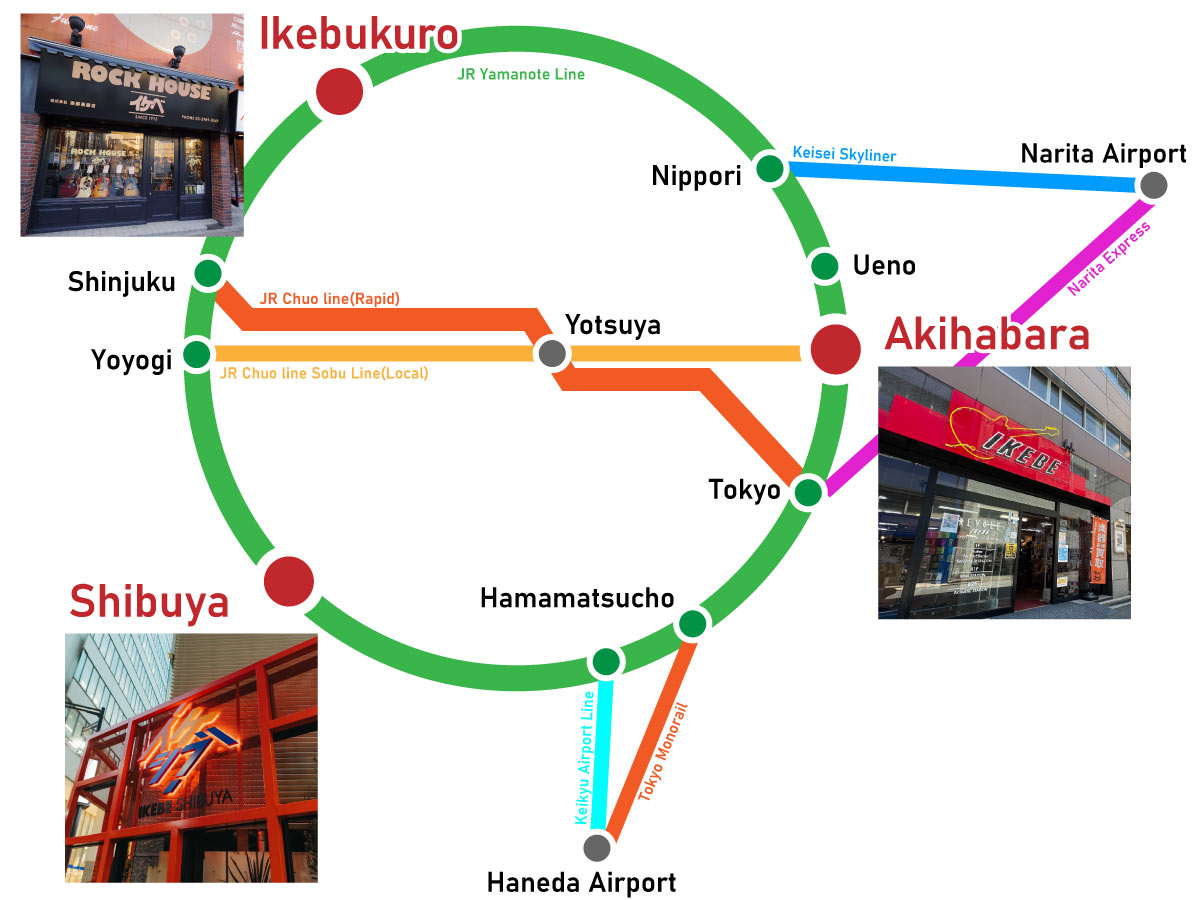
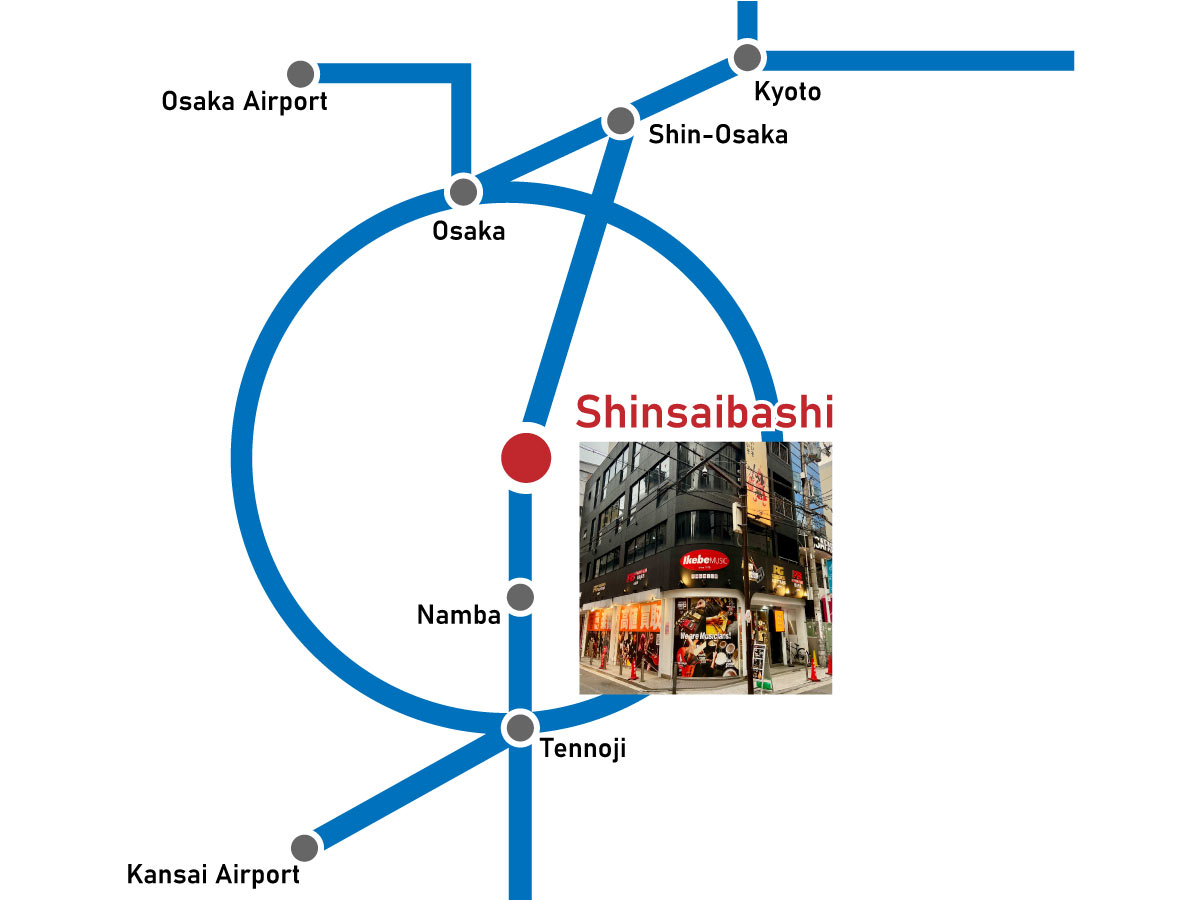
In Japan, we operate 31 stores in Tokyo (Ikebukuro, Shibuya, Akihabara) and Osaka.
We have just opened our flagship store, IKESHIBU (IKEBE SHIBUYA), in Shibuya, Tokyo, which brings together numerous musical instrument specialty stores and serves as a hub for entertainment culture.
Please be sure to stop by if you are visiting Japan.
Tokyo area
Osaka area


About Shipping


We carefully pack every item with protective materials to ensure it arrives safely.
The photos above show an example of how we securely pack a bass guitar for shipping.
Regarding handling of used products
All used products sold by Ikebe Musical Instruments Store are inspected, working, and maintained, ensuring their safety and security. We inspect each item individually for defects before shipping.
If there are any missing images, please contact us with your inquiry and let us know the angle and focus you need to better understand the condition of your item before ordering. We will respond after taking photos.
Because these are used items, we strive to provide detailed information about their condition so you can order with confidence.
Deals > Parts and Accessories


NEWS
Ver todos-

Vintage Special Deals - Till 25th October!!!
Limited-time event running until October 25th! We are holding a special-price flash sale on select vintage items. These vintage guitars have stood the test of time and still shine brilliantly...
-
![[Archive] IKEBE LIVE SHOPPING #242 | A revolution in jazz standard mouthpieces! A comparison of the Meyer/Otto Link Hybrid Series! Guest: Junsuke Motomatsu [presented by Wind Bros]](//global.ikebe-gakki.com/cdn/shop/articles/20260924_2_1080_1080.jpg?v=1791353945&width=460)
[Archive] IKEBE LIVE SHOPPING #242 | A revolution in jazz standard mouthpieces! A comparison of the Meyer/Otto Link Hybrid Series! Guest: Junsuke Motomatsu [presented by Wind Bros]
Meyer and Otto Link, established as the standard for jazz mouthpieces, are moving to a new stage! As you may recall, JJ Babbitt made headlines at this year's NAMM...
-

We have revised our shipping rates today.
We have revised our shipping rates today. We reviewed our shipping calculation method, and rates are now slightly lower than they were immediately following the recent system update—which had enabled...
-
![[Archive] IKEBE LIVE SHOPPING #240 | A thorough analysis of hand-selected items at the Fender Custom Shop factory tour, a place every guitarist dreams of visiting [presented by Grandy & Jungle / Guitars Station]](//global.ikebe-gakki.com/cdn/shop/articles/20260910_2_1080_1080-1024x1024_5680be61-c7d4-4319-8582-0a6676db5c9a.jpg?v=1789616134&width=460)
[Archive] IKEBE LIVE SHOPPING #240 | A thorough analysis of hand-selected items at the Fender Custom Shop factory tour, a place every guitarist dreams of visiting [presented by Grandy & Jungle / Guitars Station]
The Fender Custom Shop, a place every guitarist dreams of visiting.We'll thoroughly explore the appeal of the hand-picked instruments available there, along with the palpable energy of the shop! Kameda...
-

No additional shipping fees will be charged!
No additional shipping fees will be charged! With our updated payment system, you can now pay for customs duties and taxes at checkout, in addition to the product price and...
-

Ibanez electric guitars Now stocking!
On August 26, 2026, we began sales of electric guitars from "Ibanez"—a Japanese brand favored by top artists around the world. Ibanez is renowned for lines such as the RG...
-
![[Archive] IKEBE LIVE SHOPPING #235 | A thorough investigation into "What's it like to have an alto saxophone for under 300,000 yen?" Guest: Junsuke Motomatsu [presented by Wind Bros]](//global.ikebe-gakki.com/cdn/shop/articles/20260814_1_1080_1080_e80be243-f913-4a30-97e5-247e4028683e.jpg?v=1787037102&width=460)
[Archive] IKEBE LIVE SHOPPING #235 | A thorough investigation into "What's it like to have an alto saxophone for under 300,000 yen?" Guest: Junsuke Motomatsu [presented by Wind Bros]
A saxophone that costs less than 300,000 yen – how good is it really?We put it to the test and see the best balance between price and performance! Saxophones come...
-
![[Archive] IKEBE LIVE SHOPPING #233 | Stunning wood grain hand-picked in Germany! IKEBE 50th Anniversary Warwick Demonstration & Thorough Explanation](//global.ikebe-gakki.com/cdn/shop/articles/20260807_3_1080_1080.jpg?v=1786526094&width=460)
[Archive] IKEBE LIVE SHOPPING #233 | Stunning wood grain hand-picked in Germany! IKEBE 50th Anniversary Warwick Demonstration & Thorough Explanation
A special Warwick guitar made possible only to celebrate Ikebe's 50th anniversary.Each and every one embodies the unique character of the carefully selected wood. In this broadcast, we will introduce...

![[Archive] IKEBE LIVE SHOPPING #242 | A revolution in jazz standard mouthpieces! A comparison of the Meyer/Otto Link Hybrid Series! Guest: Junsuke Motomatsu [presented by Wind Bros]](http://global.ikebe-gakki.com/cdn/shop/articles/20260924_2_1080_1080.jpg?v=1791353945&width=460)

![[Archive] IKEBE LIVE SHOPPING #240 | A thorough analysis of hand-selected items at the Fender Custom Shop factory tour, a place every guitarist dreams of visiting [presented by Grandy & Jungle / Guitars Station]](http://global.ikebe-gakki.com/cdn/shop/articles/20260910_2_1080_1080-1024x1024_5680be61-c7d4-4319-8582-0a6676db5c9a.jpg?v=1789616134&width=460)


![[Archive] IKEBE LIVE SHOPPING #235 | A thorough investigation into "What's it like to have an alto saxophone for under 300,000 yen?" Guest: Junsuke Motomatsu [presented by Wind Bros]](http://global.ikebe-gakki.com/cdn/shop/articles/20260814_1_1080_1080_e80be243-f913-4a30-97e5-247e4028683e.jpg?v=1787037102&width=460)
![[Archive] IKEBE LIVE SHOPPING #233 | Stunning wood grain hand-picked in Germany! IKEBE 50th Anniversary Warwick Demonstration & Thorough Explanation](http://global.ikebe-gakki.com/cdn/shop/articles/20260807_3_1080_1080.jpg?v=1786526094&width=460)
![The_Trinity__Trumpet__Consultation_Room___Three_professional_musicians_guide_you_to_your_own_unique_answer__[Scheduled_for_release_in_late_October_2026_☆_Pre-orders_now_being_accepted!!]_01](http://global.ikebe-gakki.com/cdn/shop/files/870386_01.jpg?v=1792305844&width=640)