
![[Tuning] Types and methods of guitar and bass tuning that you might be too embarrassed to ask about now!](http://global.ikebe-gakki.com/cdn/shop/articles/how-to-tuning-1024x1024_95f43406-0910-40e1-be77-b6d0ab7ce2b5.jpg?v=1778219831&width=1600)
What do you think is the most important thing when starting to play an instrument?
It's tuning. It's a very obvious thing, but that's precisely why it's important to master it. On this page, we'll introduce various tuning methods, from the basics to drop tuning and open tuning, using actual songs as examples.
Whether you're a beginner or already familiar with the guitar, we hope that through tuning you'll experience the various playing styles and approaches that exist, and that it will be useful in your future musical life!
When should I tune my guitar? When is tuning necessary?
To put it bluntly, you should always tune your instrument. This is because guitar and bass tuning is easily affected by the environment.
I recommend tuning your instrument frequently: once you take it out of its case, and again after you finish playing a song.
Tools needed for tuning
tuner
Currently, the most widely used instrument is the tuner. There are two main types, each with its own advantages. What they have in common is that they connect to the instrument and allow you to visually check the pitch, enabling accurate tuning.

Clip tuner![]()
This tuner attaches to the headstock of a guitar and measures pitch by sensing vibrations. Its advantage is that it doesn't require connecting a cable, allowing for quick tuning.

Pedal tuner
This is a tuner that you place at your feet and measure the guitar's sound using a cable input. A cable connection is less susceptible to ambient noise, allowing for more accurate tuning.
tuning fork
A tuning fork is a metal rod with two prongs; when you hold the handle and strike it against a hard surface, it produces a beautiful "ping" sound.
It can be difficult to get the tuning right until you get used to it, but tuning with a tuning fork is also good ear training. You can also have a piano or keyboard play the note "A" for tuning.
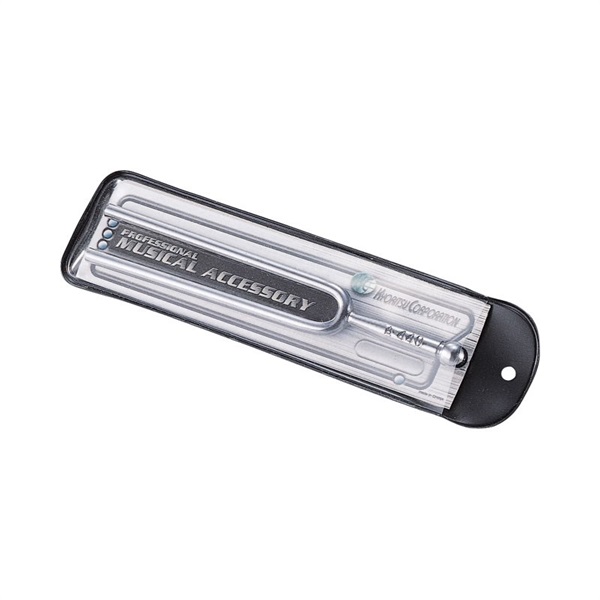
tuning fork
For tuning guitars and basses, a tuning fork that produces a 440Hz (A) note is used. You hold the handle of the tuning fork and lightly tap the tip to make it vibrate.
While it's vibrating, you can hear the sound by bringing the rounded end of the handle close to a hard object such as the guitar's top (soundboard) or to your ear.
About guitar tuning
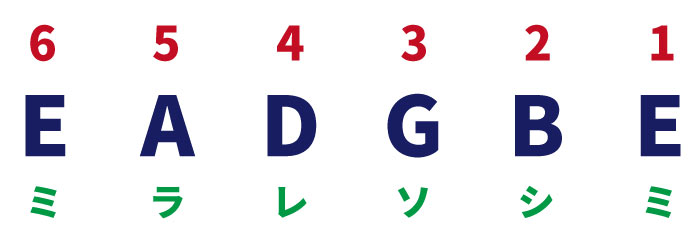
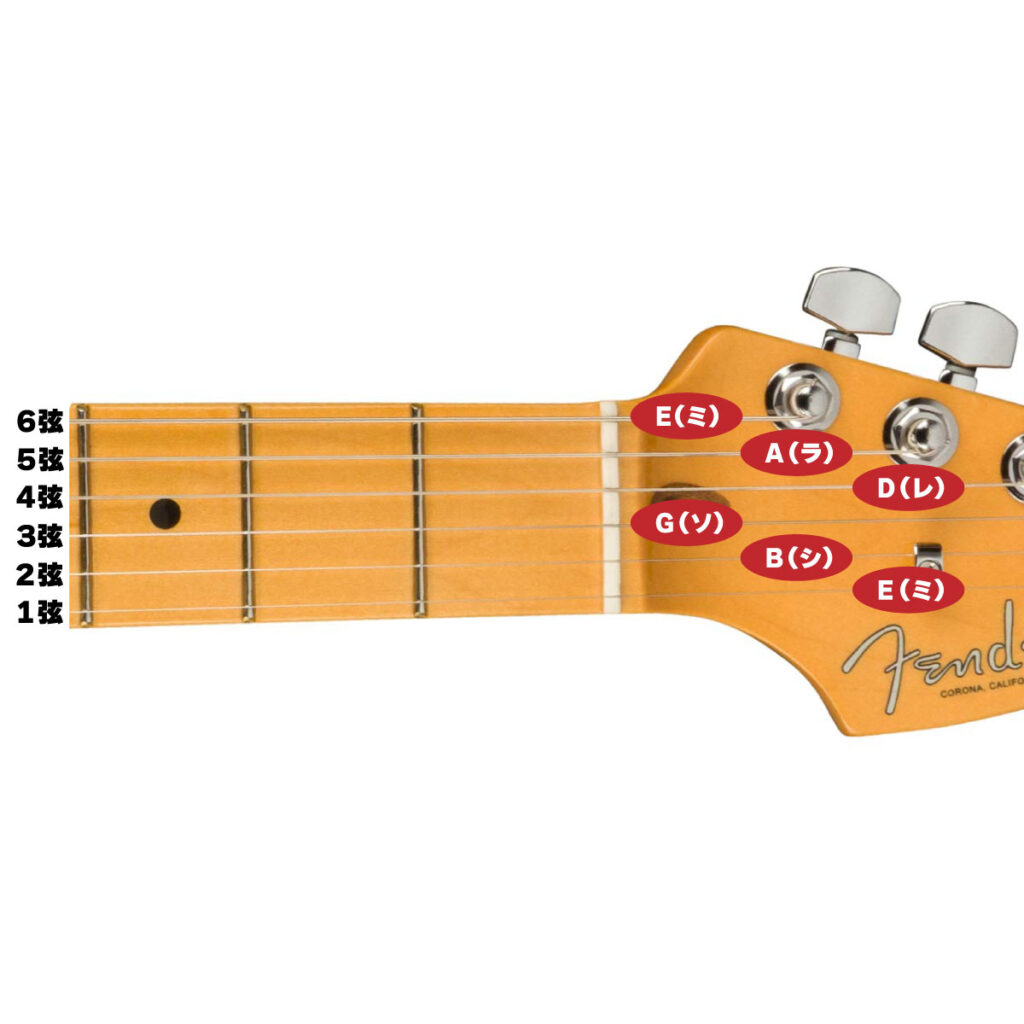
There's no strict order for tuning, but a good method is to start from the lowest string (6th string) and tune them in order: E, A, D, G, B, E. The trick is to first tune all the strings to roughly the correct pitch (about one whole tone lower), and then slowly tune them to the correct pitch.
basic
| 6 strings | E |
| 5 strings | A |
| 4 strings | D |
| 3rd string | G |
| 2 strings | B |
| 1st string | E |
About bass tuning
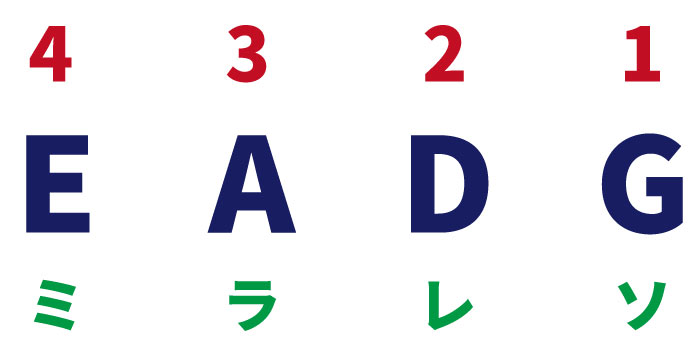
The recommended way to tune a bass guitar is to start from the lowest string (the 4th string) and tune them in the following order: E, A, D, and G.
basic
| 4 strings | E |
| 3rd string | A |
| 2 strings | D |
| 1st string | G |
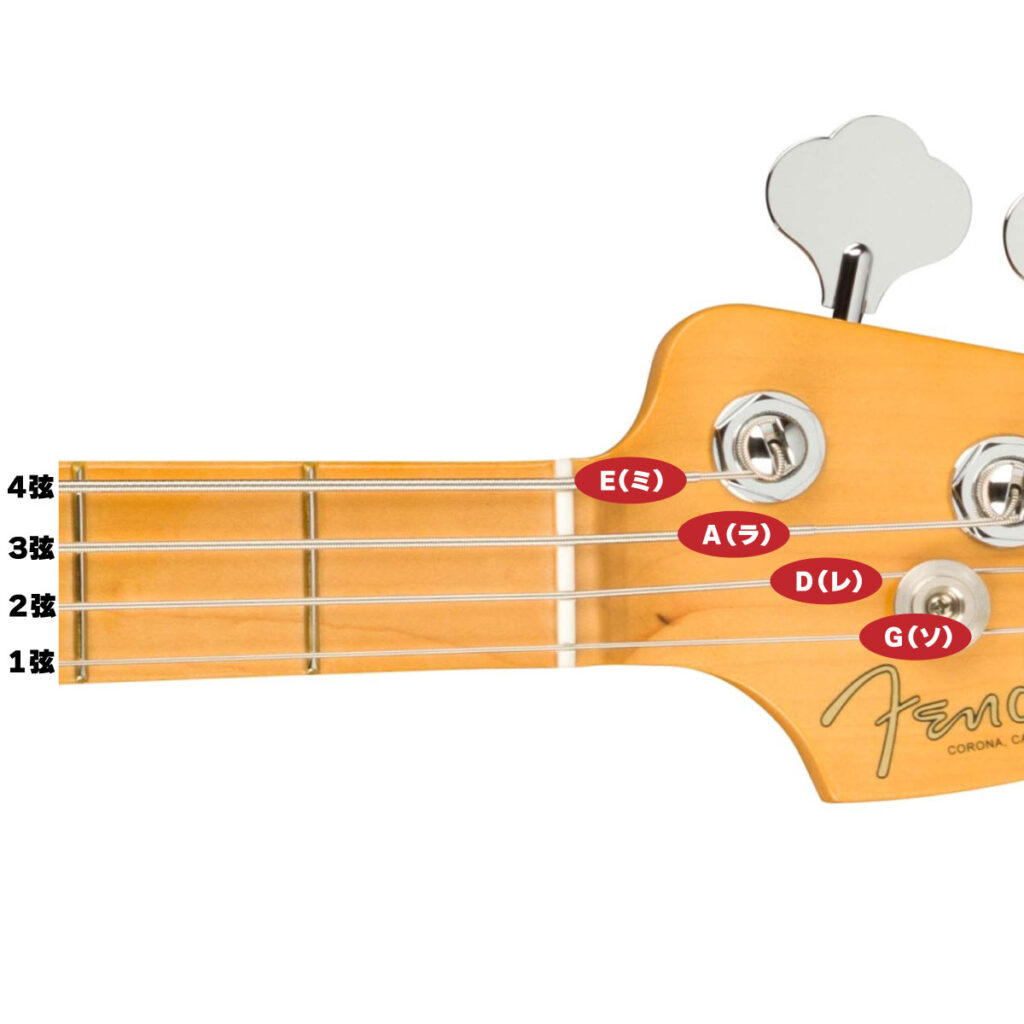
About multi-string guitars and basses
In response to the diversification of musical styles, guitars and basses are also evolving day by day.
Symbolic of this is the emergence of multi-string guitars and basses, such as 7-string guitars and 5-string basses, which increase the number of strings to broaden the range of sounds and expand the expressive capabilities of players.
Many guitars and basses now include a low B note, which allows for heavier sounds without drop tuning, enabling greater freedom of expression. The tuning chart is as follows:
guitar
| 7 strings | B |
| 6 strings | E |
| 5 strings | A |
| 4 strings | D |
| 3rd string | G |
| 2 strings | B |
| 1st string | E |
base
| 5 strings | B |
| 4 strings | E |
| 3rd string | A |
| 2 strings | D |
| 1st string | G |
What kind of songs are there?
Blind Korn
Korn, using a 7-string guitar and a 5-string bass, shocked the music scene of the 90s with their extremely heavy sound that made full use of the low B chord, and have since spawned numerous followers. Their dark tone and surging groove are noteworthy features.
Endless Variations? Special Tuning Sounds Found in Famous Songs
Now that you've read this far, I hope you understand the importance of tuning. However, I believe that even more important is enjoying playing your instrument and expanding your expressive abilities. So, I'd like to show you just how much your guitar's expression can change by simply changing your tuning method. I'll explain the key points of how to change from normal tuning and recommend some great songs. Please take a look!
Half-step down tuning
Key point: Lower all strings by a half step from standard tuning.
| Regular tuning | Half-step down tuning | |
|---|---|---|
| 6 strings | E | E♭ (D♯) |
| 5 strings | A | A♭ (G♯) |
| 4 strings | D | D♭ (C♯) |
| 3rd string | G | G♭ (F♯) |
| 2 strings | B | B♭ (A♯) |
| 1st string | E | E♭ (D♯) |
What kind of songs are there?
The unique, heavy sound achieved by tuning down a half step is often found in songs with heavy guitar riffs, such as hard rock and metal.
Purple Haze(Live at the Atlanta Pop Festival) The Jimi Hendrix Experience
When you think of half-step down tuning, the first person that comes to mind is guitar hero Jimi Hendrix. The heavy, weighty sound created by lowering the tuning, and the edgy tone achieved by combining a Stratocaster with fuzz, continue to fascinate many guitarists.
Welcome To The Jungle Guns N' Roses
This classic song, with its heavy, edgy sound created by combining a Les Paul and a Marshall amp, and its crunchy, fast-paced rhythm, has spawned many followers.
Drop D tuning
Point: From standard tuning, only the 6th string is tuned down one whole step.
| Regular tuning | Drop D tuning | |
|---|---|---|
| 6 strings | E | D |
| 5 strings | A | A |
| 4 strings | D | D |
| 3rd string | G | G |
| 2 strings | B | B |
| 1st string | E | E |
What kind of songs are there?
Because it allows for a heavy sound simply by lowering the 6th string by one whole step, it has long been used in hard rock and heavy metal, alongside half-step down tuning. On the other hand, because it can produce a unique dark feel, it can also be heard in a wide range of genres of music, such as alternative rock.
THE FINAL EPISODE ASKING ALEXANDRIA
This nuance is precisely what makes drop D tuning so special.
Primarily utilizing strings 6 through 4, the band creates a heavy and aggressive sound with a barrage of riffs that seem to imprint their own emotions onto the music.
OUTSHINED SOUNDGARDEN
His guitar approach, which skillfully combines and intertwines all six strings, not just the bass strings, is very unique. It
creates a heavy, dark, and exotic atmosphere, contributing to the breadth of the music.
Open G Tuning
Key point: Lower the 6th, 5th, and 1st strings by one whole step from standard tuning.
| Regular tuning | Open G Tuning | |
|---|---|---|
| 6 strings | E | D |
| 5 strings | A | G |
| 4 strings | D | D |
| 3rd string | G | G |
| 2 strings | B | B |
| 1st string | E | D |
What kind of songs are there?
Open tuning is popular in blues and folk music, and its distinctive sound when playing open strings allows for simplified barre chords, resulting in numerous memorable performances of sharp backing riffs and growling guitar solos utilizing slide bars. Its unique sound has made it a firm favorite among many guitarists.
Start Me Up The Rolling Stones
It's no exaggeration to say that Keith Richards is synonymous with open G tuning, having produced numerous global hit songs using it. The sharpness of his rhythm guitar, which makes masterful use of open strings, is overflowing with the dynamism of rock and roll!
Dark End of the Street Ry Cooder
Ry Cooder is credited with teaching Keith Richards the open G tuning that has become his signature. He's considered a master of open tunings, and has produced numerous memorable performances using various open tunings.
And slide guitar truly shines in open tunings, with its rich, soulful tones and melodies that deeply move the listener.
DADGAD Tuning
Key point: Lower the 6th, 2nd, and 1st strings by one whole step from standard tuning.
| Regular tuning |
DADGAD Tuning |
|
|---|---|---|
| 6 strings | E | D |
| 5 strings | A | A |
| 4 strings | D | D |
| 3rd string | G | G |
| 2 strings | B | A |
| 1st string | E | D |
What kind of songs are there?
DADGAD tuning creates a complex and fantastical atmosphere through its combination of sounds. It
is a tuning method favored in Irish music and produces a unique, free sound that is neither major nor minor.
Kashmir Led Zeppelin
There's something mysterious and grand about it, a unique sense of weightlessness that defies categorization as either major or minor. Jimmy Page's electric guitar sounds are exotic and very impressive, adding a beautiful touch to the music. It's clear that the diverse musicality he cultivated through studio work and other activities even before the formation of Led Zeppelin is in full force here.
How was it? We not only introduced tuning methods, but also various tuning approaches. Hopefully, you've gained a broader range of expression and a deeper understanding of the world of tuning. There are many more examples, including famous songs created using special acoustic guitar tunings. Please enjoy playing guitar and bass, discover various songs and tuning approaches, and have a wonderful musical life!
